• Skip to primary navigation
  • Skip to main content
  • Skip to primary sidebar

John August

  • Arlo Finch
  • Scriptnotes
  • Library
  • Store
  • About

John

Dressing like a screenwriter

September 16, 2014 Highland, Los Angeles, News

Scriptnotes is a proudly money-losing podcast, with no ads or sponsors to defray the cost of editing, hosting and transcripts. So once a year we offer t-shirts to help fill both our coffers and your closets.

In past years, we’ve sold the Scriptnotes t-shirts in various colors. They’re lovely shirts, but three colors is plenty. This year we wanted to do something different.

So we made the Scriptnotes Tour shirt.
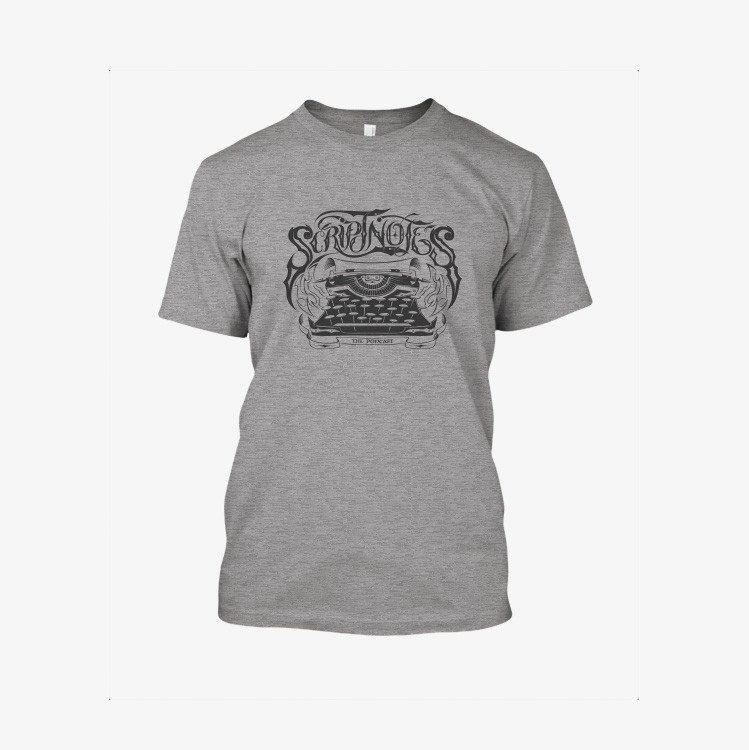
scriptnotes tour shirt

Illustrated by Simon Estrada, it’s the stadium rock band shirt made for people who listen to weekly podcasts about screenwriting. ((…And things that are interesting to screenwriters.)) For the first time ever, there’s printing on the back: a list of all the live shows, past and near-future.
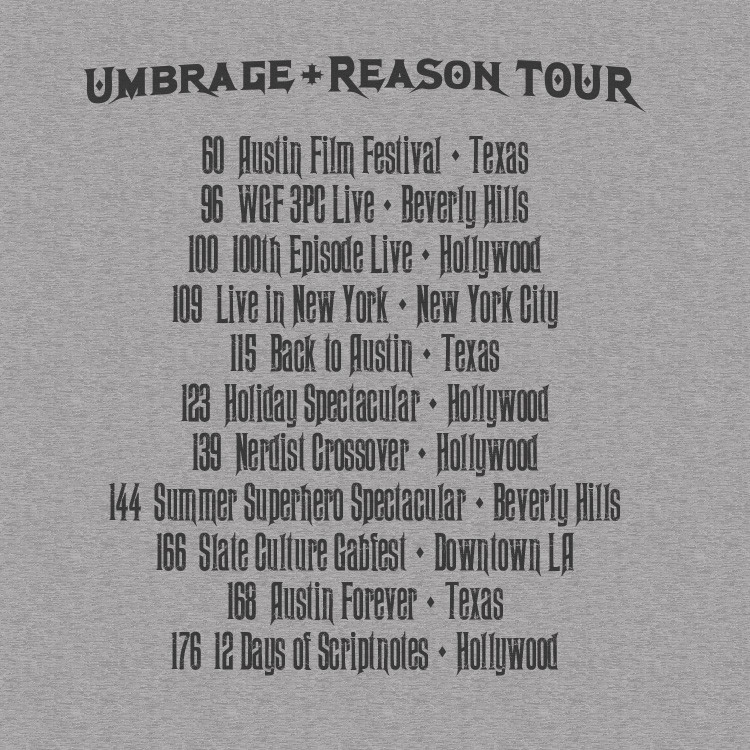
scriptnotes-tour-back-detail_1024x1024

Although the artwork is hard rock, it’s actually the softest shirt we’ve ever made. Stuart Friedel, our resident t-shirt expert, describes it thusly:

The softest shirt I ever touched was the American Apparel gray-tag tri-blend from 2007. Nothing has come close until this. It’s like wearing a daydream.

Stuart’s sense of softness led us to an entirely new garment: our first-ever hoodie. It’s spun from the downy tri-blend threads.
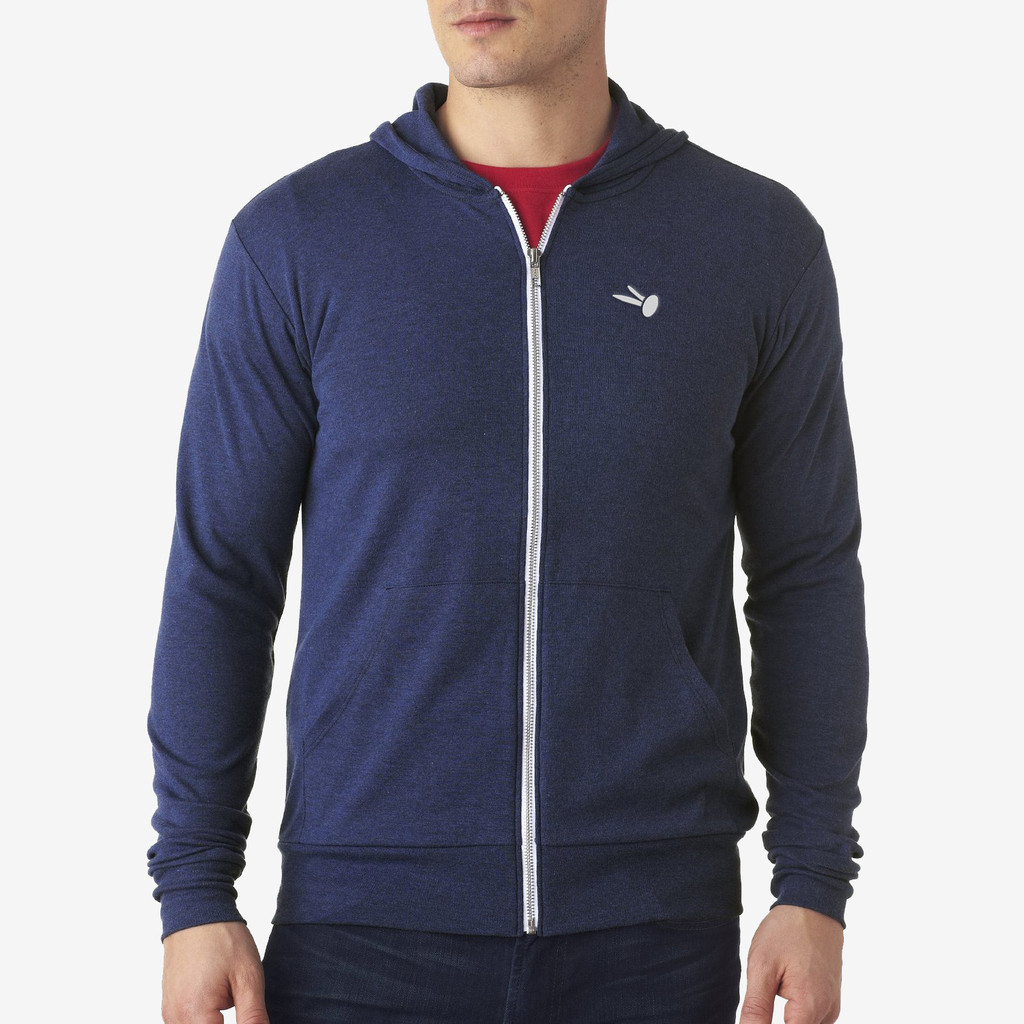
brad hoodie

We were originally going to make it a Scriptnotes hoodie, but the complicated typewriter logo translated poorly to embroidery. A much better choice was this blog’s brad icon: simple, iconic, and specific.

Hoodies are the fundamental outerwear of the modern screenwriter: dressy enough to wear to a water-bottle general meeting, casual enough to wear while walking your dog at Runyon Canyon.

We deliberately picked a lightweight fabric, perfect for an over-air-conditioned coffeeshop when it’s 100 degrees outside.

Our final bit of new schwag came to us from an email by George Gier:

You may never know how much I appreciate Highland, but it turned reformatting hundreds of pages of garbage into two clicks of perfection. It rules. If you make a Highland T-shirt, I will be the first to buy one and wear it proudly.

George Gier, this is your shirt (but everyone else can get them too):
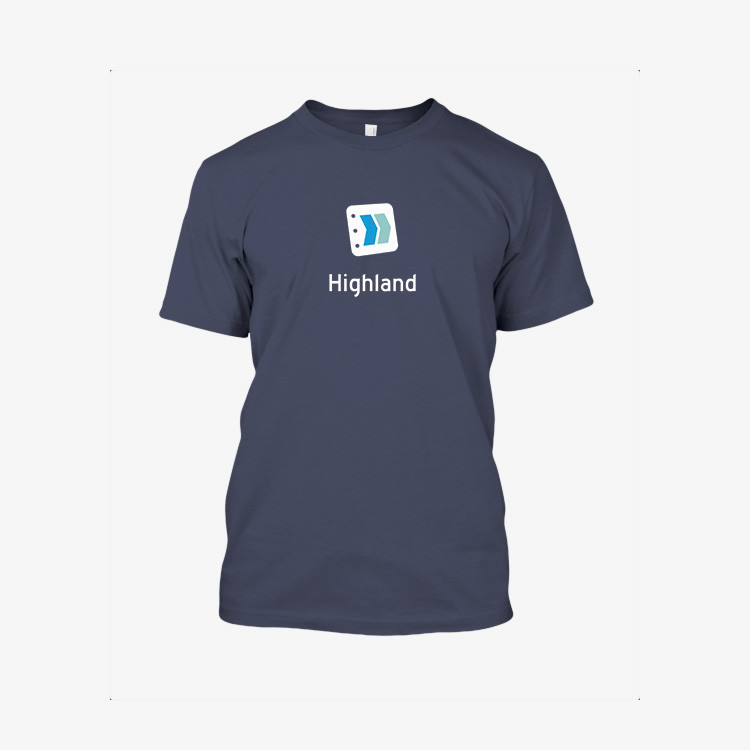
highland shirt

For the Highland shirt, we went back the same tee we used for the Karateka shirts: strong and simple, 100% cotton. It’s a deep indigo, reminiscent of Dark Mode.

Making the Highland icon work on a t-shirt was an interesting challenge. The “real” icon uses gradients and shadows that wouldn’t translate to screen printing, so Ryan Nelson flattened everything down.

Highland icons

I kind of love it. Mac icons are still supposed to have depth and shadow, but don’t be surprised if future versions of Highland move a bit in this flatter direction.

If you’re wearing the Highland t-shirt, you’re not only promoting a great screenwriting app. You’re literally wearing the future.

Getting the gear

Both the t-shirts and the hoodie are available for pre-order starting today. Pre-orders end September 30th. We only make enough to cover orders, so if you want one, you have to get your order in.

Note: Hoodies are a special case. Because the embroidery setup costs are higher, we can only make hoodies if we hit a minimum. If we don’t reach the threshold, we’ll give refunds to anyone who ordered one.

All orders ship beginning October 8th. You should have them in time for the Austin Film Festival.

Unlikable heroes and genre expectations

September 2, 2014 Genres

Chloe Angyal has a great look back at My Best Friend’s Wedding:

[T]his movie is, in many ways, radical. It’s an anti-rom com. Jules spends much of it running around like a crazed rom com heroine, pulling ridiculous stunts and operating under the assumption that you can lie, trick, and manipulate a person into falling out of love with their fiancée and into love with you. It doesn’t work, and George, who is half walking gay stereotype and half The Only Sensible Person in This Movie tells her on multiple occasions to give it up and act like a grown up. She is, after all, TWENTY-EIGHT.

[…]

But the line I find more telling is what he tells her while she’s still chasing Michael through the streets of Chicago in a stolen truck while talking on a cell phone. “You’re not the one,” he says. You’re not the one. These four words fly in the face of almost every rom com ever made, because the central premise of the genre is that the heroine is the one: the one woman who can get the ungettable guy, who can turn the beast back into a prince, who is worth traveling through time for, whatever. The One. Jules is not the one. She doesn’t get the guy. She does terrible things to try to get him, to try to “win” him. She follows all the laws of rom com world, but the laws don’t apply here. Kimmy calls her two-faced and Michael calls her pond scum, and though they ultimately forgive her, those assessments are correct.

When I saw My Best Friend’s Wedding in 1997, I remember being struck by just how selfish the Julianne character was — and yet how perversely relatable that made her for me. Real people do stupid things because of love and fear. It’s not “likable,” but it’s honest.

Should we make more Scriptnotes t-shirts?

September 2, 2014 Follow Up, News

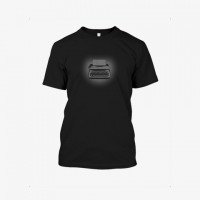
scriptnotes_blackWe have very few Scriptnotes t-shirts left in the store. We’re considering printing a new batch, but we’re not sure which color listeners would actually want.

The first round of shirts came in Umbrage Orange and Rational Blue. The second batch came in only Basic Blacklist.

For the new t-shirts, we’re considering revisiting one of the earlier colors, or something new like WG Gray or Residual Green.

gray samplegreen sample

So, assuming t-shirts sell for $19, tell us:

[yop_poll id=”5″]

And if we make new t-shirts, should we stick with the typewriter logo, or do something new? We’ve talked about doing something that feels collegiate, or sports-ish, or blackletter death metal style.

So we’re not sure exactly what the style would be, but we have talented design folks, so it would be solid.

Given that vague description, what would your preference be?

[yop_poll id=”6″]

Finally, listeners have suggested other Scriptnotes gear. Are any of these things things you’d actually buy? T-shirts are really simple to ship. Everything else is kind of a hassle.

But we’ll certainly consider it if there’s a groundswell of interest.

[yop_poll id=”7″]

As always, you can tweet me if there’s something you’d rather see.

On trust, drama and corporations

August 20, 2014 Psych 101, Words on the page

The project I’m writing centers on trust. The more I think about the word and the concept of trust, the more complicated it becomes.

Most definitions of trust contain some combination of “confidence” and “reliability,” both of which often include trust in their own entries. Circular definitions are not especially helpful, so let’s try to pull them apart.

Confidence is an inner conviction, a firmly-held belief often (but not always) supported by facts or prior experience. I have confidence that it will not rain today, because it’s below zero outside.

Reliability is the quality of being able to depend on something to consistently perform as expected. They’re expensive, but the reliability of these hard drives is unmatched.

Combining these two ideas, we can arrive at a pretty good definition of trust:

Trust is confidence in the reliability of someone or something.

Or, in longer form:

Trust is the inner conviction that someone (or something) will do what you expect.

When you look at trust this way, you see several fascinating characteristics:

  1. Trust is something internal, a personally-held belief.
  2. The focus of trust is something external. ((In a phrase like, “trust my own eyes,” the eyes are not the person speaking. Even in phrases like, “trust yourself,” it’s still a transitive verb. I’d argue the “you” you’re supposed to trust is a projection of an idealized person.))
  3. The focus of trust is something that can take its own actions. You can trust your neighbor or your dog. But it’s weird to talk about trusting a chair or a newborn. ((Can you trust a robot or a zombie? The answer depends on the degree to which you believe it’s making its own decisions. If it’s just following its coding or brain-chomping instincts, the best you can do it predict it, not trust it.))
  4. Trust is a prediction about the future. Even in the past tense, it’s referring to the then-future: “I trusted him, but then he slept with a barrista.”

Trust has many thematic cousins — faith, hope, belief, honor — all of which can be explored in fiction. But for the screenwriter, trust is better.

Trust is dramatic.

Trust works well on screen because it’s about a relationship between two characters, and can be explored with actions rather than just words.

The rival soldiers who find themselves stranded behind enemy lines? Trust.

The husband whose wife snoops through his email? Trust.

The scorpion and the frog? Trust. ((And overdone. Can we please stop referencing the scorpion and the frog?))

Like faith, hope, belief and honor, there’s an internal aspect to trust, but it manifests outwardly. You don’t just trust; you trust someone. And the process of one character growing to trust another character lends itself to interesting scenes and conflicts. Often, late-story actions reveal whether that trust was well-placed.

We often speak of trust when it’s broken. Or shattered. Or destroyed. Worth noting: when we lose trust in someone, it’s rarely described gently. It’s almost always smashy and violent. In fact, we often discuss trust using crystalline metaphors:

Trust is like a mirror, you can fix it if it’s broken, but you can still see the crack in that motherfucker’s reflection. (Lady Gaga, Telephone)

Trust means drama.

Impersonal trust, and corporate anthropomorphization

Trust is also supposedly at the heart of the sharing economy we live in, but what does it mean to trust Facebook, or Amazon, or Uber?

In the case of Uber and Lyft, the companies have a human face: the driver who picks you up. You have a pact of unspoken trust between you. You trust the driver to deliver you to your destination; she trusts you not to vomit in the back seat. ((My last Uber had paper bags, much like you’d find in airplane seatbacks, ready for drunken Saturday night customers.)) Both of you trust the service to handle all the money details.

But with Amazon or Google, there’s no person in front of you to trust or distrust. When Stuart says he “trusts Google Maps,” what is he actually trusting?

I’d argue he’s trusting an anthropomorphized entity he’s created in his head. He’s already granting it a sort of consciousness: “Google Maps wants me to take the 10, but that’s crazy, right?”

The Supreme Court was criticized for recent decisions that treated corporations like individual persons, but the truth is we do it all the time. It’s a useful shorthand (“Apple fears Android growth”), and allows us to distinguish the employees of a corporation from the corporation itself. “I admire the engineers at Google, but not Google.”

And we’ve always done it with countries. (“France wants a carbon tax.”)

In personifying abstractions like countries and corporations, we’re able to talk about whether we trust them. But I’m not sure that’s a good thing overall.

Maybe if we looked at them for what they are — a collection of moving pieces, more like a swarm than a single entity — we’d be more prudent. Can you trust something that is constantly changing and reassembling itself?

That’s a good dramatic question. I call dibs.

« Previous Page
Next Page »

Primary Sidebar

Newsletter

Inneresting Logo A Quote-Unquote Newsletter about Writing
Read Now

Explore

Projects

  • Aladdin (1)
  • Arlo Finch (27)
  • Big Fish (88)
  • Birdigo (2)
  • Charlie (39)
  • Charlie's Angels (16)
  • Chosen (2)
  • Corpse Bride (9)
  • Dead Projects (18)
  • Frankenweenie (10)
  • Go (29)
  • Karateka (4)
  • Monsterpocalypse (3)
  • One Hit Kill (6)
  • Ops (6)
  • Preacher (2)
  • Prince of Persia (13)
  • Shazam (6)
  • Snake People (6)
  • Tarzan (5)
  • The Nines (118)
  • The Remnants (12)
  • The Variant (22)

Apps

  • Bronson (14)
  • FDX Reader (11)
  • Fountain (32)
  • Highland (75)
  • Less IMDb (4)
  • Weekend Read (64)

Recommended Reading

  • First Person (87)
  • Geek Alert (151)
  • WGA (162)
  • Workspace (19)

Screenwriting Q&A

  • Adaptation (65)
  • Directors (90)
  • Education (49)
  • Film Industry (489)
  • Formatting (128)
  • Genres (89)
  • Glossary (6)
  • Pitches (29)
  • Producers (59)
  • Psych 101 (118)
  • Rights and Copyright (96)
  • So-Called Experts (47)
  • Story and Plot (170)
  • Television (165)
  • Treatments (21)
  • Words on the page (238)
  • Writing Process (177)

More screenwriting Q&A at screenwriting.io

© 2026 John August — All Rights Reserved.