• Skip to primary navigation
  • Skip to main content
  • Skip to primary sidebar

John August

  • Arlo Finch
  • Scriptnotes
  • Library
  • Store
  • About

John

I’m joining the WGA board

September 20, 2017 News, WGA

On Monday, I was elected to the board of directors for the Writers Guild of America, West. I’ll be serving a two-year term.

Huge thanks to everyone who voted, and the folks who encouraged me to run.

At one of the campaign mixers, I had the chance to speak with some writers who had only been in the guild for a few weeks. It got me thinking back to the first time I voted, about 20 years ago. I remember going through the campaign booklet, reading every statement, and marking each one on a scale of one to ten. Then I’d go back through and pick the six or eight candidates I was going to vote for.

I took it really seriously, and I still do.

What’s funny to realize is that most of those candidate statements from 20 years ago could have been written today. They were talking about many of the same issues: late payments, improving diversity, free rewrites, protecting our health plan. And it’s easy to see why: these are some of the fundamental objectives of the guild. The WGA exists to make sure our members get paid and protected.

We’re always going to be fighting these fights, whether it’s through negotiation or enforcement. It’s always been the same.

That’s not to say nothing has changed in 20 years. Things are changing quickly. And that’s why I decided to run this year.

Through this site and Scriptnotes, I get the chance to talk to a lot of writers, both in features and TV. Established writers, aspiring writers, everyone in between.

And the consistent thing I’m hearing is, huh. Nothing is working the way it used to, or “supposed to.” There’s a ton of TV being made, but the seasons are short. Features are being figured out in writers rooms, and no one’s quite sure when the “writing” begins, or how we should figure out credit.

We’re in the middle of a disruption. The industry is shifting to some new form, and none of us know what it’s going to become. No one in the guild, no one on the studio lots in Burbank. We’re all flying blind.

Maybe it will be great for writers — like the start of home video, or cable, with new opportunities and new revenue streams. We’ll all be getting fat paychecks to write VR experiences unlike anything we’ve seen before.

But maybe we won’t.

What keeps me up at night is that second possibility, that we’re facing a future where it becomes almost impossible to make a living as a professional writer in Hollywood. I worry that those new WGA members I talked to at the mixer won’t be working 20 years from now because the industry will become unrecognizable.

For me, these next two years are not about a negotiation, but an investigation of where we’re at and what our priorities should be. We elect the board to be trustees of the guild. And part of that is making sure there is still such a thing as a professional writer.

But while we keep an eye out for future dangers, we have to make sure we’re doing everything we can for writers today.

From late pay to unpaid rewrites to exclusivity clauses, there are many areas where members are looking to the WGA to take action.

Some issues can only be addressed through negotiation. But I believe better enforcement is key to improving the day-to-day life of writers — and screenwriters in particular. I talk with feature writers trapped in an endless fog of development, hostage to a paycheck that never comes.

We need to make sure the WGA represents writers not just collectively at the negotiating table, but also individually when employers abuse their power.

I want to believe I’m approaching the work ahead with an appropriate blend of idealism and realism. As I said in my campaign statement, many of the issues we face are structural, historical and/or intractable. But the progress we’ve made in recent negotiations points to our ability to address new problems with new solutions. That’s what I’m looking forward to doing along with the new board and officers.

How Arlo Finch got his name

August 30, 2017 Arlo Finch, Author, Books, Writing Process

A reader asks:

What other names did you consider and how did you land on Arlo Finch?

I have a very hard time writing a character if I don’t love the name. So I obsess over picking the right one. I’ll spend hours staring in the middle distance, trying out various combinations until something clicks.

The right name would be especially important in this case. From the start, I was pretty sure the book was going to be titled some variation of Boy’s Name in the Place of the Noun, so I needed something appropriate for both a 12-year-old boy and a three-volume fantasy series.

For Arlo Finch, the last name came first.

I’ve always liked Finch, either as a first or last name. It’s been on my what-about list for years. It has the combination of feeling classic but unusual — I’ve never met anyone named Finch, but I wouldn’t be surprised to. Culturally, I’d believe that the family was American, possibly of English descent.

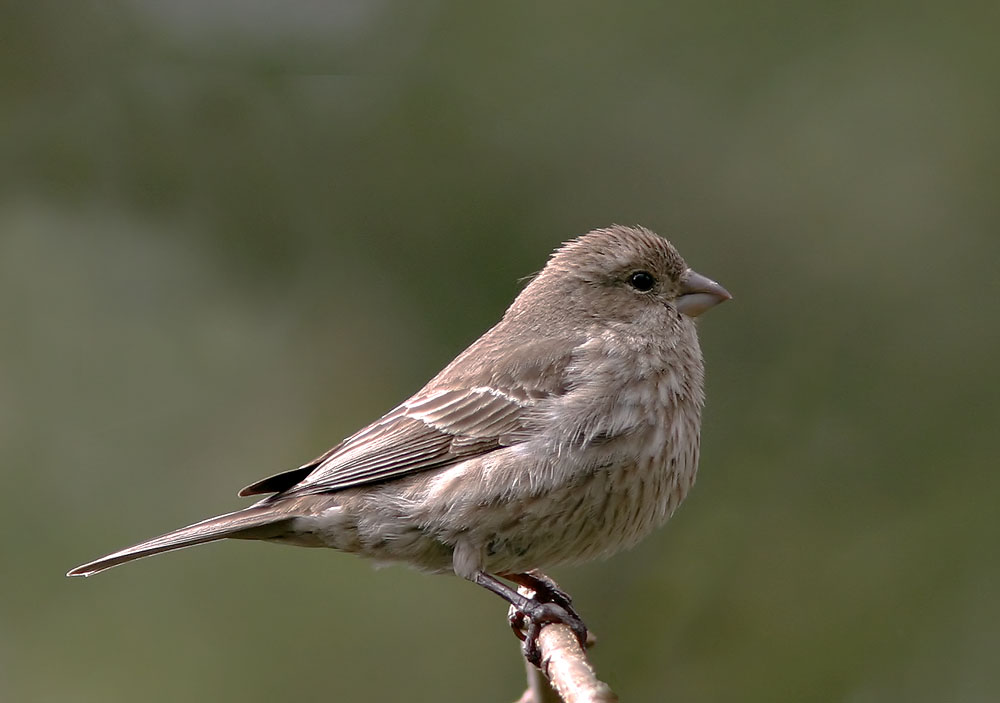
Of course, “finch” is also a kind of bird. I’m not much of an ornithologist, but I knew they were small and flitty. So I googled them.

Here’s a house finch:

brown bird

From the photographer’s description:

that look is the quintessence of cool plainness. “I am extraordinarily ordinary.”

Male finches can actually be quite colorful, but I really like the simplicity of this brown and tan female.

Finch happens to be the last name of the family in To Kill A Mockingbird. That’s a great pedigree. But it’s also related to my own family’s name.

My original last name is Meise, which is the German term for the bird we call a titmouse.

Here’s the tufted variety:

small bird

So the Finch and die Meise are both small flitty birds. They’re not the same, but they’re the same general idea. Since I knew the main character of the book was going to be a stand-in for my 12-year-old self, it felt right to give him a name similar to mine.

Once I had settled on Finch, “Arlo” came relatively quickly.

Working off a list of common boys’ names, I started by ruling out single-syllable names, like John or Jim or Rob. The staccato one-two of these names can certainly work (e.g. Huck Finn, John Wick, Tom Ford), but it didn’t feel right for this. ((“Ray Finch” sounds like a private eye. “Bill Finch” sells insurance.))

Moving up to two syllables, you quickly realize that almost all boys’ names have the stress on the front half: DUH-duh rather than duh-DUH. But even within that pattern, there’s lot of variation on where your mouth ends up when finishing the weak syllable.

Try saying the following names out loud:

Liam Finch
Jacob Finch
Logan Finch
Joseph Finch

In the first two examples, the final ‘m’ and ‘b’ require you to put your lips together, which makes for a weird transition to the start of “Finch.”

The ’n’ of Logan is easier, but still requires a fair amount of tongue-repositioning for the ‘f.’

And Joseph Finch sounds like one word: jossefinch.

Ideally, you’d want to end the first name with a vowel sound so it would be easy to hit the ‘f.’ ((A ‘r’ would also work. Yes, it’s a consonant, but at the end of a word it stays open like a vowel. “Roger Finch” is easy to say.)) But there aren’t many boys’ names that end in a vowel, and they tend to sound Old Testament-y:

Noah
Levi
Eli
Leo
Ezra
Jonah
Henry

Henry was a contender. It worked well with Finch, and was my father’s name. But it didn’t quite feel like the character. I ended up making Arlo’s best friend “Henry Wu.”

I found Arlo quite low on the list. ((The first name Arlo is #502 on this list, but has apparently risen to #299 for 2017. I have a hunch its popularity is going to continue growing, regardless of what happens with the book. It feels like a new Noah or Wyatt.)) I loved it immediately. Like Finch, it was a name that I’d never seen in the wild but certainly believed could exist.

“Arlo Finch” is easy to pronounce. The ‘o’ flows naturally into the ‘f.’ (Almost too naturally — some people hear it as “our loaf inch.”)

Typographically, its four letters look good together — an important consideration for a word that will show up multiple times on every page. And it balances really nicely with Finch when you see both words together.

I chose the name on October 29th, 2015. The next day, I set to work writing chapter one. Arlo’s sister became Jaycee Finch — another two-syllable first name ending in a vowel. His mom became Celeste Bellman Finch.

Months later, I discovered there’s at least one real person named Arlo Finch. But that’s not particularly surprising. There are quite a few Harry Potters and Tom Riddles out there as well.

Ultimately, what makes a name work isn’t that it’s unique, but that it uniquely suits the character. For this book, for this kid, I was really happy to find Arlo Finch.


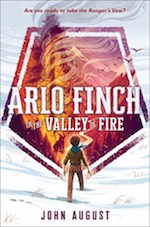
book cover

Arlo Finch in the Valley of Fire comes out February 6, 2018 in the U.S., with international editions available later in the year.

You can read more about the book at arlofin.ch.


Dennis Lehane on novels vs. screenplays

July 18, 2017 Adaptation, Arlo Finch, Psych 101

Scriptnotes listener Eric in Boston pointed me towards this quote from Dennis Lehane on the difference between writing novels and screenplays:

They’re apples and giraffes. Completely different, outside of their core narrative DNA. When you write a novel you’re God, in charge of the whole universe, from the farthest galaxy to the smallest pebble. When that book is published, everything in it was filtered through you and you alone (with some nudging and advice from your editor, of course).

When you write a script, you’re like a house painter in a large mansion. You give the rooms their color but you don’t build the house or concern yourself with the plumbing. A screenwriter is one of, say, 140 people who contributes to the film. And your script is just a schematic to be interpreted by a director, actors, the director of photography, the set designers, costume designers, editor, producers, studio execs, and on and on and on.

It’s much harder to be God; novels take way longer to write than scripts and are much more emotionally and psychologically taxing but they’re also—by a longshot—more fulfilling.

I largely agree with Lehane, but want to caution that screenwriters shouldn’t take his house painter analogy too far. You’re not just decorating the rooms; you’re deciding where the walls need to be so that the whole thing doesn’t collapse.

Particularly when working on their own original projects, screenwriters must be just as invested in every galaxy and pebble. They may not include these details — screenwriting is an art of extreme economy — but you have to know what you’re leaving out.

I’m writing book two of the Arlo Finch series right now. The process is rewarding and exhausting, but the level of responsibility I feel to the story’s universe and characters is not fundamentally different than when writing the first draft of a script. In both cases, I’ve moved into their world, and am writing what I see.

The biggest shift comes later, once I’m ready to show the work to others.

With a screenplay, I need to coordinate my vision with dozens of other decision-makers so we can make a movie. That’s the psychologically taxing aspect of the job: writing as if it’s all yours while knowing it’s ultimately not.

With a book, I’ve made decisions down to the comma and conjunction, knowing they’ll persist. Arlo Finch isn’t a blueprint; it’s the thing itself. No matter what happens down the road, my choices are preserved on the page.

Lehane’s right: books and screenplays are like apples and giraffes. I like both of them, and hope to have more of each in the years ahead.

Chekhov’s Ladder

Episode - 308

Go to Archive

July 11, 2017 Scriptnotes

Craig and John discuss the concept of affordances — player expectations for what videogame characters can do — and how writers can apply these principles to their film and TV scripts.

Teaching the audience to know what is and isn’t possible can be hard to do artfully, but often makes all the difference.

Also this week: reducing sexism in screenplays, plus answers to listener questions about writers on set and giving feedback on friends’ terrible scripts.

Tickets for the July 25th live show are on sale, GET YOURS!

Links:

  • The Scriptnotes Homecoming Show
  • The Scriptnotes Listeners’ Guide!
  • The USBs drives!
  • Addams Family on Netflix
  • Olivia de Havilland Sues FX
  • Creators of Tupac biopic ‘All Eyez on Me’ sued
  • Defining Environment Language for Video Games
  • Chekov’s Gun
  • Hanging a Lantern, or Lampshading
  • How To Reduce Sexism In Screenplays
  • Morty’s Screenplay Criticism
  • Domino Toppling
  • Submachine Escape Room Game
  • John August on Twitter
  • Craig Mazin on Twitter
  • John on Instagram
  • Find past episodes
  • Outro by Rajesh Naroth (send us yours!)

Email us at ask@dev.johnaugust.com

You can download the episode here.

UPDATE 7-18-17: The transcript of this episode can be found here.

« Previous Page
Next Page »

Primary Sidebar

Newsletter

Inneresting Logo A Quote-Unquote Newsletter about Writing
Read Now

Explore

Projects

  • Aladdin (1)
  • Arlo Finch (27)
  • Big Fish (88)
  • Birdigo (2)
  • Charlie (39)
  • Charlie's Angels (16)
  • Chosen (2)
  • Corpse Bride (9)
  • Dead Projects (18)
  • Frankenweenie (10)
  • Go (29)
  • Karateka (4)
  • Monsterpocalypse (3)
  • One Hit Kill (6)
  • Ops (6)
  • Preacher (2)
  • Prince of Persia (13)
  • Shazam (6)
  • Snake People (6)
  • Tarzan (5)
  • The Nines (118)
  • The Remnants (12)
  • The Variant (22)

Apps

  • Bronson (14)
  • FDX Reader (11)
  • Fountain (32)
  • Highland (75)
  • Less IMDb (4)
  • Weekend Read (64)

Recommended Reading

  • First Person (87)
  • Geek Alert (151)
  • WGA (162)
  • Workspace (19)

Screenwriting Q&A

  • Adaptation (65)
  • Directors (90)
  • Education (49)
  • Film Industry (489)
  • Formatting (128)
  • Genres (89)
  • Glossary (6)
  • Pitches (29)
  • Producers (59)
  • Psych 101 (118)
  • Rights and Copyright (96)
  • So-Called Experts (47)
  • Story and Plot (170)
  • Television (165)
  • Treatments (21)
  • Words on the page (238)
  • Writing Process (177)

More screenwriting Q&A at screenwriting.io

© 2026 John August — All Rights Reserved.