Due to some mysteriously high server loads, I’ve had to turn off comments until I get back from vacation. Hope everyone is having a great holiday.
flagged
Dialogue versus exposition
What is a good way to distiguish good dialogue from exposition?
— Josh Hatfield
Dialogue:
FRANK
Let’s say we try to keep the dysfunction indoors, huh?
Exposition:
O’MALLEY
Thompson was a down-on-his-luck bookie who thought he could swindle Ackland out of the ticket profits. He wasn’t counting on Rickman having the same idea.
Always ask yourself: Would the character actually say this, or is he only saying it because you need the audience to know some fact or detail? If the answer is the latter, you’re writing exposition and not dialogue.
That’s not good.
At its worst, you risk “M Syndrome,” named for the James Bond boss whose sole function seems to be telling 007 all the backstory so he knows who to shoot. (This was parodied in the Austin Powers movies by Michael York’s character, Basil Exposition.)
Honestly, there are times when you really do need to have a character say something that’s purely plot. In certain genres, like police procedurals, exposition is pretty much par for the course. But to the degree possible, try to avoid situations where characters are spouting information.
Wherever possible:
- Show the information, rather than having a character say it.
- Try to follow a natural line of thought: A to B to C.
- Simplify. The reader may not need to know everything.
- Keep your hero active in learning the information, rather than passively listening.
- Balance natural speech patterns with efficiency. People rarely say things as concisely as they could.
Avoiding exposition is hard, especially in plot-dependent stories. But it’s one of the first things a reader notices, so spend the time to deal with it.
Charlie and the Chocolate Factory teaser up
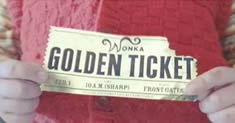 The teaser for Charlie and the Chocolate Factory is now up at Yahoo!, for those who are interested. It should be attached to movies beginning this weekend.
One good thing about a movie like this is that you don’t have to worry about the trailer spoiling the movie, because the story is already familiar to most people. If you go through the teaser frame by frame, you can match up pretty much everything with events from Roald Dahl’s book. That’s not to say there aren’t some surprises in the movie, though.
Thanks to reader Steve for pointing out the link.
Formatting a reality show proposal
How should a proposal for a reality show be structured? My research to date suggests that reality shows have been evolving towards a more “scripted” format, although I understand that writers don’t get credited (yet).
I have an idea for a reality show (doesn’t everyone, eh?) – so how should it be presented to a producer? An overall description of the premise, and ideas for several episodes? What level of detail is needed (or not needed)?
— Jedd
New Orleans, LA
There are already too many reality TV shows, which are taking jobs away from writers. So I won’t answer your question.
.
.
.
Okay, I will. But you have to promise your show will be something inspiring like the Amazing Race and not soul-destroying like, well, anything that starts with My Big Fat Obnoxious Dot-Dot-Dot.
There’s nothing approaching a standard format for something like a reality TV show, or, surprisingly, a scripted show. In the Downloads section, you’ll see my initial write-ups for The Circle. The format seems pretty standard and straightforward, but I wasn’t trying to match any template. I just wrote what I thought needed to be explained.
For your reality show, I think the proposal would need to include:
- The premise
- The people (host, contestants, whatever)
- The tone, including some sample dialogue/narration if appropriate
- The reward or outcome
- Structure of a typical episode
- Future episode descriptions
I think you need to present enough detail so that the producer really understands what the show is, and how it differs from anything else on television. If you have a background in physical production, you might include more detail about shooting days, crew or locations, but if you don’t know, don’t try to fake it.