• Skip to primary navigation
  • Skip to main content
  • Skip to primary sidebar

John August

  • Arlo Finch
  • Scriptnotes
  • Library
  • Store
  • About

flagged

Why most scripts never become movies

January 22, 2006 Film Industry, QandA

questionmarkOn September 5th you had said that “most scripts don’t become movies, and a hundred things could go wrong in the process.” What exactly was meant by this, and of the scripts that you have written and you deemed worthy of the silver screen, how many actually made it there?

–Sweta
via IMDb

We’ll start with the second part first. By my count, I’ve written 18 feature-length scripts. I have seven produced credits, which means I have a 39% production rate.

That’s actually not bad. It gives the illusion of being prolific when in fact it’s just a combination of luck and careful picking. As I’ve said before, my favorite genre is “movies that get made.”

I’ve also done significant-but-uncredited rewrite work on seven other screenplays, five of which have been made.

Your question includes the qualifier, “[that] you deemed worthy of the silver screen.” I can honestly say that at the time I wrote them, I considered every one of my scripts worthy of the screen.

Now? Not so much.

But for the sake of example, let me list my never-made scripts and briefly explain why they won’t be playing soon at a theatre near you.

Here and Now
My first script. Nicely written but largely plotless.

How to Eat Fried Worms
Was actually made this year, but with a script by a different writer.

A Wrinkle in Time
Was made for television, with a draft that pre-dated mine.

Untitled Zombie Western
Will probably get made at some point, in some form.

Fenwick’s Suit
The studio didn’t like my script, and let the underlying rights lapse.

Demonology
The studio thought it was too expensive for what it was.

Thief of Always
The director and the author hated my draft. Hated.

Secret Project I Can’t Talk About
Will hopefully get made soon.

Barbarella
The two studios bickered and dickered until the underlying rights fell out.

Fury
Probably will get made at some point, in some form.

Tarzan
In a perpetual holding pattern at the studio.

Studios develop a lot of projects that never end up getting made. Every few years, an outsider with a lot of money will come to Hollywood and vow, “We’re not going to waste money. We’re only going to develop the projects we’re going to make!”

And a few years later, they’ll have a dozen projects in various stages of development, and maybe one or two movies. Because it’s not just the script that determines whether a movie gets made. You need the right director, the right stars, the right way to market the movie. You can be a week from shooting when a hurricane destroys your location, or a strike shuts down production. Or the exchange rate takes a dive.

As the screenwriter, there are hundreds of variables I can’t control. So I consider it a minor miracle any time a movie gets made.
Virtual Sundance

January 20, 2006 Film Industry

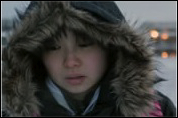
parkaIt’s quiet in Hollywood this morning, because a large percentage of the town in is Utah for the Sundance Film Festival.

For those who’ve never been, let me give you a quick impression of what it would feel like if you were there.

  • First, imagine everyone you’ve ever worked with, both good and bad.
  • Next, put them in parkas and boots.

  • Arrange them all in a long line stretching down the sidewalk. It’s very much like the queue for a Star Wars movie, except the film in question is a vulgar Hungarian “comedy” about three generations of masturbators. (Note: I actually saw this film.)

  • Add a Weinstein.

  • Call in favors to get on the list for the secret Beastie Boys show.

  • Somehow get into the secret show, only to realize that a room packed with two hundred people in parkas is pretty miserable.

  • Go to sleep, wake up, then see a few movies you probably wouldn’t bother watching on cable.

I’m not at the festival this year, partly because I just got back from the “other” Sundance: the Sundance Screenwriters Lab. I was an advisor this year, helping five filmmakers work on their upcoming features. The projects were all terrific.

Two of my advisees have films in the festival this year. So Yong Kim’s film In Between Days is intimate and amazing, and a perfect example of why digital filmmaking allows for new kinds of storytelling.

Photographer Carter Smith has his short film Bugcrush in the festival. Looking at the trailer, you’d think, “Hmm. That looks disturbing.” Trust me: the film is so, so much more disturbing than that. In a good way. Mostly.

Unless you have a thing about bugs.

Something weird with the RSS feed

January 6, 2006 Geek Alert, News

If you’re reading this site through the feeds, an FYI: the plain-old RSS feed (the 0.92 version) isn’t working right for some reason. You’d be better off with the 2.0 version or the Atom feed, both of which seem to work fine.

Race and the screenwriter

January 3, 2006 Rant

Craig Mazin and Alex Epstein both recently tackled a topic that was on my to-blog list. Yes, I keep a list of things I intend to blog. And yes, I tend to just write whatever strikes me at the moment anyway. But since Alex and Craig got to it first, I might as well say what I was going to say.

At issue is whether it’s a good idea for the screenwriter to specify ethnicities for various characters. Alex believes in doing the “diversity pass” to keep his script from being lily-white. Craig feels this is absurd and racist.

Craig is wrong.

But not for the reasons you’d expect. While Craig and I tend to be on different wavelengths politically, he tends to come down on the side of common sense. And I think there’s a very practical matter that’s being overlooked.

Unless it’s important for understanding a story point, I rarely specify a race for a character. But that’s not to say I won’t give some strong hints. I will often make the lieutenant GONZALEZ rather than GOODMAN. The internist is more likely to end up DR. CHO than DR. CHASE. The schoolteacher will be PATEL rather than PETERS.

Is it liberal guilt? No. It’s readability.

Screenplays are read quickly. Unlike a novel, you don’t linger for a few paragraphs getting to know minor characters, setting up their memorable quirks. Rather, you meet them on page 20, then see them again on page 64. As a screenwriter, you want the reader to instantly recall that they’ve encountered a certain character before.

A reader is much more likely to remember an international banker named Abebayehu Tegene than Abe Thompson.

You can debate why this is. Maybe it’s just that the name is more interesting. But in most cases, I think it’s because we’re hard-wired to match race to surnames. We see Abebayehu Tegene and we think, “This character is black. Not only that, he’s probably African.” We form a mental picture of “African banker,” then move on.

With Abe Thompson, the reader has nothing to latch onto. Abe Thompson is just a name.

Note that giving a character an African surname doesn’t remove the burden of actually making this character interesting. If he says more than a few lines, there better be something notable about him independent of race. Both Tegene and Thompson might be condescending snobs who openly mock our hero.

But come page 64, you’ll still remember Tegene over Thompson.

In the real world, what are the implications of implying ethnicities for these characters? As I’ve noted earlier, when casting, the assumption tends to be “white unless otherwise specified.” But if you write “Judge Fujimoro” rather than “Judge Foster,” there’s a pretty good chance you’ll end up with a Japanese judge.

You might find that stereotypical, or an example of blatant tokenism, such as the “black lieutenant syndrome” which hit cop shows in the ’90’s. After all, shouldn’t the part go to the best actor, regardless of race?

Yes, in theory. In reality, for a small supporting role, it’s a binary decision. Either the actor is Good Enough or Not Good Enough. If you’re casting a judge in Los Angeles, there’s no question you’ll find plenty of Good Enoughs. It might take an extra 20 minutes to find Japanese Good Enough. To me, it’s time well spent.

Obviously, there’s a lot more that can be written about race and screenwriting. As I noted in an earlier post, the role of Ronna in Go was written as African-American. We ended up casting Sarah Polley, perhaps the whitest Canadian you could find. So was I right to write “Black” in the script? Was I wrong to take it out?

Just as it’s naive to think that making a minor-but-likable character Iraqi will better the world, it’s foolish to assume that leaving a character “race-less” lets the screenwriter off the hook. Readers, including directors, studio executives, and casting directors, will assume that European names belong with white people, and that surgeons are white men in the early 50’s, unless you tell them otherwise.

So I say, make the geophysicist Abdul Kalam. Don’t do it for diversity. Do it for your script.

« Previous Page
Next Page »

Primary Sidebar

Newsletter

Inneresting Logo A Quote-Unquote Newsletter about Writing
Read Now

Explore

Projects

  • Aladdin (1)
  • Arlo Finch (27)
  • Big Fish (88)
  • Birdigo (2)
  • Charlie (39)
  • Charlie's Angels (16)
  • Chosen (2)
  • Corpse Bride (9)
  • Dead Projects (18)
  • Frankenweenie (10)
  • Go (29)
  • Karateka (4)
  • Monsterpocalypse (3)
  • One Hit Kill (6)
  • Ops (6)
  • Preacher (2)
  • Prince of Persia (13)
  • Shazam (6)
  • Snake People (6)
  • Tarzan (5)
  • The Nines (118)
  • The Remnants (12)
  • The Variant (22)

Apps

  • Bronson (14)
  • FDX Reader (11)
  • Fountain (32)
  • Highland (75)
  • Less IMDb (4)
  • Weekend Read (64)

Recommended Reading

  • First Person (87)
  • Geek Alert (151)
  • WGA (162)
  • Workspace (19)

Screenwriting Q&A

  • Adaptation (65)
  • Directors (90)
  • Education (49)
  • Film Industry (489)
  • Formatting (128)
  • Genres (89)
  • Glossary (6)
  • Pitches (29)
  • Producers (59)
  • Psych 101 (118)
  • Rights and Copyright (96)
  • So-Called Experts (47)
  • Story and Plot (170)
  • Television (165)
  • Treatments (21)
  • Words on the page (238)
  • Writing Process (177)

More screenwriting Q&A at screenwriting.io

© 2026 John August — All Rights Reserved.