• Skip to primary navigation
  • Skip to main content
  • Skip to primary sidebar

John August

  • Arlo Finch
  • Scriptnotes
  • Library
  • Store
  • About

flagged

Photos from Malawi

July 17, 2007 General

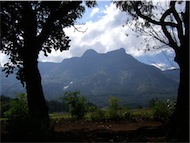
Mulanje MtI have all my photos from my visit to Mulanje, Malawi up on Flickr for the world to see. You can check them out here.

You may want to use the “View as slideshow” link. If you do, you’ll notice a floating lower-case “i” over the center of the main photo. (You may need to mouse over it to make it appear.) Click it, and you can see all of the captions.

Malawi is a land-locked country in southern Africa. A former British colony, it is now one of the poorest nations on Earth. It’s been especially hard-hit by HIV/AIDS, losing a huge portion of its 20 to 40-year olds. Young parents, especially. It’s now a nation of children and old people.

FOMO (Friends of Mulanje Orphans) runs 10 centers, providing services to 4,000 orphans. Ryan and I visited to help repair and repaint the Gulumba Centre, and to meet the kids who are doing remarkably well in remarkably difficult circumstances.

We also visited medical clinics, in the hopes of establishing a presence for U.S. Doctors for Africa. Treatable diseases like malaria are a huge threat, and the lack of medicine and infrastructure is crippling.
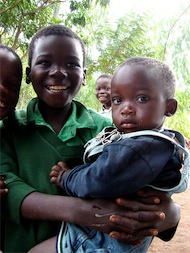
brothersFor all its challenges, Malawi is incredibly beautiful, as are its people. It’s like an island nation without an ocean.

So what now? I’m still figuring that out.

Obviously, FOMO will continue to need financial support, and I can help with that.As can you, obviously. It’s a registered U.K. charity. But to a larger degree, Malawi really needs to be put on the map of human awareness. There’s no hot story happening in Malawi: no civil war, no genocide, no pretty blonde tourist going missing. The country is isolated and easy to overlook. And its citizens are so invariably polite, it’s hard to imagine them demanding their fair share of the world’s attention.

But I think there are unique opportunities in Malawi. It’s stable and English-speaking. It’s infrastructure is lacking — its roads in particular are a mess — but the lack of embedded choices can be a blessing. If there’s any place perfect for leapfrogging to the Next Better Idea, it’s Malawi.The land-line phones (and with it, the internet) in the entire Mulanje region went out for three days, yet I got four bars on my cell phone almost everywhere. Wireless internet in the U.S. is handy. Wireless internet in Malawi seems essential.

The main reason I wanted to blog about the trip is that I’ve always been kind of uncomfortable-slash-terrified about the developing world and global poverty. And I suspect most readers are, too. It’s overwhelmingly macro.

But when you look at it in the micro scale, it’s not nearly so intimidating. I didn’t leave with any big answers, but I now know a bit about keeping kids fed. And how to install a corrugated metal roof. (You nail through the peaks, not the valleys, with capped nails.) I spent most of my time painting walls, and watching. Learning.

Obviously, not everyone is in a place financially to book a ticket to the other side of the world and just help out. (That’s what Ryan and I basically did.) But a lot of my readers are young — in college, or just after that — which is a perfect time to head out and explore the world. If any part of you is thinking about doing that, trust your instincts.Beyond university-affiliated programs, a quick Google search will reveal dozens of programs that specialize in a new kind of “voluntourism.” We considered programs in five African countries and South America before picking FOMO.

Summer Sundance, part two

June 26, 2007 Follow Up, Sundance

questionmarkWhat exactly do you discuss at Sundance? They’re entering with completed scripts, which I assume are perfect to them at the beginning, so where to next? And if you participate in the Screenwriting Lab are you automatically given a Directors Lab spot, if that is what you so choose to do with your completed work?

— Christina Shaver

The scripts the Fellows are bringing to Sundance are completed drafts, but they’re still works in progress. The advisor meetings aren’t notes sessions, but rather a chance to talk through ideas with experienced writers, whose fresh eyes can identify problems and opportunities. It’s like therapy for your script.

Over the last two days, I met with Braden King and Dani Valent, whose script HERE is a road movie set in Armenia, and Sophie Bartes, whose COLD SOULS is an existential comedy.My final project is Richard Montoya’s WATER AND POWER, adapted from his acclaimed play. I lucked out this year in that all of my assigned projects feel like Actual Movies I Would Pay to See. Both projects went through the Directors Lab, so the filmmakers had a chance to see how the scenes worked when put up on their feet, which left them with new questions and ideas.

Over the course of the lab, each writer has five meetings with different advisors. In some meetings, I’ve gone page by page with the fellows, looking at how this line on page 19 is setting up an expectation that never really pays off. In other meetings, I’ve left the script in my backpack, instead talking in broad terms about character POV, balancing tones, and the rewriting process. It’s a conversation, and all based on what the Fellow needs. One of the smartest innovations in the Sundance Labs experience is that the advisors meet each morning to talk through the previous day’s sessions, thus building on each other’s work.

I screened THE NINES last night for the group. It was strange to see it in one of same theaters as January, but with a completely different crowd and set of expectations. (And a new, vastly better digital projector.) Atom Egoyan had screened THE SWEET HEREAFTER the second night, and it was terrific to finally be able to ask him questions about his movie and his process.

Sundance doesn’t change much year-to-year, but there have been a few adjustments this time:

* There’s a documentary lab running concurrently, so we’ve gotten to mingle with some editorially-oriented folks.
* There’s wireless, and thus blogging.
* In an effort to reduce waste, they handed out water bottles and coffee mugs upon arrival to use instead of paper cups and disposable bottles. It’s been remarkably effective. Because you’re at altitude, you have to drink a lot of water, and having a container with your name on it makes it simple.We recently banned bottled water at home. Our water cooler was using $145 worth of electricity each year, and that’s not counting all the energy wasted packaging and delivering the giant bottles. It’s surprisingly easy to adjust.
* They got rid of wine at dinner, but added receptions to (partially) make up for it. Again, you’re at altitude, so it doesn’t take much.

Summer Sundance

June 24, 2007 News, Sundance

I’m up at Sundance for the summer filmmakers’ lab, where I’ve worked as an advisor for the past seven years.

For those unfamiliar with the labs, it’s a workshop in which newer filmmakers (generally writer-directors) meet with established screenwriters in one-on-one sessions to sort out issues in their scripts. There’s a winter lab, which occurs right before the festival in January, and a summer lab, which includes a three-week directing component before the week-long screenwriting portion. Many notable films have come out of the Sundance labs, including PARADISE NOW, BOYS DON’T CRY, and HEDWIG AND THE ANGRY INCH.

This year, there are 13 projects, five of which I’m reading. This morning, I met with James Ponsoldt on his script REFRESH, REFRESH. In the afternoon, I met with JJ Lask on THIS IS NOT A PIPE. They were both challenging projects, and great meetings.

What I love about the labs is that it’s a completely safe place. There are no agendas, no secret motivations. The advisers all genuinely want to help the fellows make the best movies they choose to make, with no “shoulds” or “oughtas.” There’s not a single movie up here that I would have written, yet they’re all fascinating, original, and deeply personal. You end up learning as much about the filmmaker as the script.

I have a hunch that an unusually high percentage of the films in development at this year’s lab will make it to the screen. You can see a complete list of the projects here.

Her least favorite mistake

June 20, 2007 Film Industry, Genres, QandA, Rights and Copyright, Television

questionmarkLast year I wrote a spec episode of Grey’s Anatomy entitled “My Favorite Mistake” wherein platonic best friends, Izzie and George, hook up. I registered my script with the WGA and sent it in to be considered for the ABC writing fellowship. I never heard back from the fellowship (their loss, no biggie) but I was surprised to see that last Thursday’s episode shared a title (exactly the same) and a subplot as my spec.

I do not believe that Shonda and team copied my idea… but i do think it is possible that they could have inadvertently copied my title. They had the means, etc. So my question is a two parter: 1) should I do anything about this? and 2) where is the line drawn? Would my script have to be identical to the one broadcast to possibly be plagiarized?

— Jackie Honikman

I don’t watch Grey’s Anatomy, so I looked up an episode guide online. One of the first things I noticed was that every episode is named after a song — that’s their thing, just like the title of every episode of Friends begins “The One With…”.

Being a good spec script writer, you followed their style and picked a song title. You chose a Sheryl Crow song. So did they. What are the odds?

Huge. So absurdly huge that you’re going to feel foolish in about three paragraphs.

I know you didn’t write in expecting to be ridiculed, so I want to give you a few sentences to prepare yourself. It’s not that I dislike you, Jackie, or disbelieve you. I’m sure when you first saw the episode title, you were surprised, hurt, disappointed and angry. These are natural emotions. But then the dark engines of your brain kicked in. You convinced yourself that through some byzantine process, your idea had been appropriated. But it hadn’t. It wasn’t.

You wrote your email at the end of March.People ask how long it takes me to answer a reader-submitted question. Generally, I read them all within the week they’re sent in, and flag the ones I think will be interesting and applicable to the readership. But it’s not a first-in-first-out process. Sometimes, a question will land in my inbox that I’ll answer within the hour. There’s a big element of serendipity. But that’s not an invitation to submit the same question multiple times. That will almost guarantee that I won’t answer, since I’ll think, “Didn’t someone else just ask that?” So I’m hoping you’ve moved on, written other scripts, and laughed about how prescient you were. But in case you haven’t, I’m going to rip off the band-aid.

Let me restate your question:

I recently wrote a spec episode of Grey’s Anatomy. I worked very hard on making it exactly like the show, right down to the title. I was subsequently shocked — shocked! — to see that the writers of the show had the audacity to write an episode exactly like their own show. Who can I sue?

Put this way, your fallacy is clear — you’re confusing cause and effect. You think their “Favorite Mistake” is similar to yours because they somehow read and stole your idea, when in fact it’s similar because it’s frickin’ Grey’s Anatomy. You followed their conventions. You included their characters. You emulated their show as closely as you could.

You copied them, not vice-versa. Got it?

In terms of the title, given the show’s adult-contemporary demographics, it was pretty likely they were going to have a Sheryl Crow track sooner or later.In fact, the second episode was titled “The First Cut is the Deepest.” Sheryl Crow’s cover had topped the charts the year before. As far as I can tell from the promos (and parodies) I’ve seen, the show is about young doctors hooking up and breaking up. “My Favorite Mistake” sounds like a good fit. They didn’t need your script to come up with that idea.A while back, a screenwriting colleague was dealing with a guy who was claiming on messageboards that a certain blockbuster was stolen from his script. The “proof?” One of the characters had the same name. Basically, the guy was arguing that the screenwriter had changed the plot, the setting, the character’s motivations — pretty much everything but this one character’s name. It’s hard to claim that a conspiracy is both thorough and lazy.

In addition to the cause and effect problem, I think there’s also a fallacy of limited sampling. You’re looking at your script and the episode you saw. But if an independent reader had your script and 10 other spec scripts of the show to compare to the produced episode, would they really think yours was all that similar? I doubt it.I’m sure this “fallacy of limited sampling” has a more official name, but I couldn’t find it. (It’s not the fallacy of generalization, which infers about a large population based on a too-small sample.) If anyone can link to the proper term, I’ll be much obliged.

Or as another test, a reader could compare your script to 10 produced episodes of the show. Would he be able to tell which one your script “influenced?” Again, doubtful.

Unfortunately, this misguided conflation of “similarity” and “plagiarism” is not confined to spec episodes of TV shows. One woman claimed that both The Matrix and The Terminator franchises were stolen from her work. She managed to attract a fair amount of media attention before her case was finally thrown out.

By targeting both The Terminator and The Matrix, this case helps point out what really underlies a lot of similarities between literary works: genre conventions. It’s one thing to put a killer robot in your script, but don’t claim you invented robots.The same goes for any variation of robot: friendly robot, suicidal robot, kleptomaniac robot, fatherly robot, existentially-angst-ridden robot. We can all think of other examples. Having a divorced cop who likes doughnuts is not original — and neither is having him hate doughnuts, or having him be psychic, or dead. Having two doctors hook up on a show about doctors hooking up doesn’t strike me as particularly original.

Again, Jackie, I’m not trying to belittle your feelings. It’s frustrating to spend weeks working on something, only to find a similar project already out there.

In my early days, I outlined a series that would chart the last years of Earth — a meteor was coming, and everyone knew it. So I was understandably disappointed when not one, but two movies with essentially the same plot hit theaters. It forced me to look back and remember where the idea really came from: a bunch of popular-science articles at the time which mapped out what had likely killed off the dinosaurs, and what would happen if another such asteroid hit Earth.

I soon realized that my having the same idea as giant blockbusters was actually a good thing. It meant I had commercial taste. A writer isn’t one script. A writer is someone who can write. Forty scripts later, my meteor idea isn’t even a footnote in my career. Don’t let your Grey’s Anatomy spec be anything more than something you wrote.

« Previous Page
Next Page »

Primary Sidebar

Newsletter

Inneresting Logo A Quote-Unquote Newsletter about Writing
Read Now

Explore

Projects

  • Aladdin (1)
  • Arlo Finch (27)
  • Big Fish (88)
  • Birdigo (2)
  • Charlie (39)
  • Charlie's Angels (16)
  • Chosen (2)
  • Corpse Bride (9)
  • Dead Projects (18)
  • Frankenweenie (10)
  • Go (29)
  • Karateka (4)
  • Monsterpocalypse (3)
  • One Hit Kill (6)
  • Ops (6)
  • Preacher (2)
  • Prince of Persia (13)
  • Shazam (6)
  • Snake People (6)
  • Tarzan (5)
  • The Nines (118)
  • The Remnants (12)
  • The Variant (22)

Apps

  • Bronson (14)
  • FDX Reader (11)
  • Fountain (32)
  • Highland (75)
  • Less IMDb (4)
  • Weekend Read (64)

Recommended Reading

  • First Person (87)
  • Geek Alert (151)
  • WGA (162)
  • Workspace (19)

Screenwriting Q&A

  • Adaptation (65)
  • Directors (90)
  • Education (49)
  • Film Industry (489)
  • Formatting (128)
  • Genres (89)
  • Glossary (6)
  • Pitches (29)
  • Producers (59)
  • Psych 101 (118)
  • Rights and Copyright (96)
  • So-Called Experts (47)
  • Story and Plot (170)
  • Television (165)
  • Treatments (21)
  • Words on the page (238)
  • Writing Process (177)

More screenwriting Q&A at screenwriting.io

© 2026 John August — All Rights Reserved.