• Skip to primary navigation
  • Skip to main content
  • Skip to primary sidebar

John August

  • Arlo Finch
  • Scriptnotes
  • Library
  • Store
  • About

fixed

Make your introduction

April 25, 2007 Challenge, Words on the page

Following up on last week’s article about How to Introduce a Character, I think it’s time for the second ever Scene Challenge. [Scene Challenge]

For the first one, Masturbating to Star Trek, you had to write an entire scene. This time, you simply have to introduce one character. And trust me, sometimes that’s harder.

Here’s all I’m giving you:

A man is picking up his clothes at a dry-cleaner.

The man is a principal character in your script, and this is the first time we’re meeting him. What’s his name? What’s the story? What’s the genre? You decide, to the degree it matters.

You’re welcome to write as much of the dry-cleaner scene as you want, but the focus is on the man’s introduction. The winning entry might be one sentence long. You may wish to consult the how-to for helpful suggestions.

Here are the rules:

  1. Post your entry in the comments thread of this article. Please don’t attempt fancy formatting. It usually just screws up the margins.
  2. All entries must be submitted by 8 a.m. PST on Saturday, April 28th, 2007. Remember that comments are sometimes held in moderation. Don’t submit twice. It will show up. Promise.
  3. I’ll pick a winner later that day.
  4. Winner receives bragging rights, which may be exchanged for a sense of self-worth. Liz used her win to make an appeal for meningitis vaccination.

And…begin.
The Nines gets all domestic

April 11, 2007 Projects, Sundance, The Nines

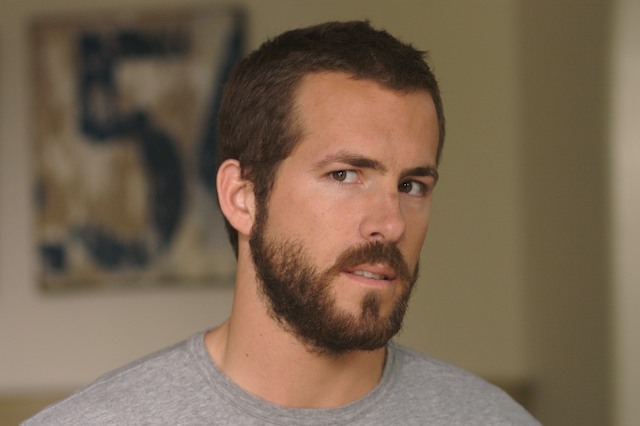
RyanEver since Sundance, when I announced that GreeneStreet scooped up international rights to The Nines, I’ve been faced with many questions. I knew the answer to the big one but couldn’t say. The answer to all the others depended on the first. So I’ve been sitting patiently, feigning detached acceptance, when I wanted to be shouting from the rooftops.

But since we made it official this morning, I’m now Mr. Answer Man.

Who’s releasing The Nines in the U.S.?

Newmarket. They’re the folks behind Donnie Darko and Memento. If you’ve got a challenging indie with geek appeal, they’re your distributor of choice.They’re also the folks behind Passion of the Christ, but I truly don’t think we’ll become a $200-million surprise blockbuster. Though there are thematic similarities… They’re partnered with Sony, who is handling all the home video/television stuff. Sony has done four of my movies, so I feel especially comfortable with them.

How long have you known?

Pretty much after the second screening. There were other players in the mix that first week after Sundance, so we ended up screening the movie all over town. But from my first meeting with the Newmarket folks, I strongly suspected it was going to work out. Did it take longer that I expected? Ohlordyes. As stressful as that legendary up-all-night Sundance dealmaking can be, at least it gets done quickly. The alternative is weeks of t-crossing and i-dotting, with multiple parties who always seem to be flying overseas. It was a marathon rather than a sprint, but the sales team for the movie (Rich Klubeck, David Kramer and Irwin Rappaport) got it across the finish line in great shape. The producers and I are hugely indebted to them.

How happy are you?

Very. The Nines is a movie which some people love fanatically, yet leaves other people scratching their heads. Newmarket has a great track record with this kind of film, and won’t try to market it as something it’s not. They’re small, and can give it the kind of steady nurturing it needs. As for Sony, they’re huge, and a giant home video distributor has a unique ability to get DVDs onto shelves. Whether the movie grosses $2 million or $20 million, I know that 99% of viewers will end up seeing it on a TV set. I want to make sure that it’s always available to be seen.

When can I see it?

How about tomorrow? We’re holding a special screening on Thursday night (April 12, 2007) in Hollywood. It’s mostly for vendors (the trailer-and-poster folk), but we have a limited number of seats available for readers of this very blog. It’s not a test screening; there are no cards to fill out. But we might email you afterwards to solicit your opinions on marketing matters.

If you want to come, here’s the skinny:

  • Send your REAL NAME to… watchthenines@gmail.com…with the subject line “Thursday Night Screening.”
  • Again, you have to email. Do not ask for tickets in the comments section, because you will be mercilessly mocked. I might even stick Yancy on you.
  • All invites are you plus one guest.
  • You need to be able to be there at 7:15 p.m., because it’s starting at 7:30 p.m. sharp.
  • It’s first-come, first-serve. Don’t send in multiple emails. It’s not a lottery.But I will get Shirley Jackson on you if pushed.
  • If you’re in, we will email you by 6 p.m. tonight (Wednesday) with details. If you don’t get an email, take heart — there will be more screenings.

(UPDATE: The email address is watchthenines@gmail.com, not watchforthenines. But both accounts are forwarding, so if you sent it to the latter, it will still go through.)

When is it coming to (insert town here)?

There’s talk of an early fall release, but some of that depends on a certain French festival which I don’t want to jinx by mentioning. Regardless, we’ll probably be a New York/Los Angeles exclusive at first, and then expand as the response merits. With this kind of movie, it’s entirely possible it won’t end up showing at your local multiplex. And that’s okay. That’s what DVDs are for.

When is it coming to (insert country here)?

The international release will follow the domestic release, but every country will be different. We’ll have more information on the official site as soon as we know.

When can we see a trailer?

Dude, when can I see a trailer? I’m as curious as you. I’ve seen artwork for the international posters, which rock. So we’re off to a good start.

Renumbering when moving a scene

March 29, 2007 Formatting, Projects, QandA, The Nines

questionmarkLet’s say you are doing revisions and are dealing with scene numbers, and a scene gets moved up/down. How do you format the scene number?

Say scene 70 moves up in front of scene 69. Do the numbers read: 68, 70, 69? Or: 68, 68A, 69, 70 OMITTED.

Technically the scene still exists, i.e. was not omitted. What to do?

— Johnny

The second form is correct, though my AD’s prefer to use the letter before a scene number, for reasons I explained in an earlier post. So I would number the scenes…

68
A69 (the scene you moved)
69
70 OMIT“OMIT” or “OMITTED”. Either is okay. (where the scene used to be)

With rare exception,One exception was The Nines, due to some complicated time-and-reality issues, which made normal sequencing too confusing. When revisiting an earlier scene, we’d put an X in front of the scene number. So, X48 was a version of scene 48. you always maintain scene number continuity. If you’re pretty far into pre-production, it may be helpful to include a note either with the script revision or on the page itself to point out the change, so a harried production designer (for example) doesn’t look at the “OMIT” and suddenly stop construction on a needed set.

The “OMIT” is a good place to put such a note:

70 OMIT [This scene is now A69.]

How do you become successful?

March 27, 2007 Education, Film Industry, QandA

questionmarkI’m currently a grad student at USC film school. Your site was a great help to me in learning how to write screenplays, then applying to and getting into USC.

From the class that graduated with you, either from Stark, production, or writing programs, what percentage in your estimation have gone on to success in the industry? What traits defined those who did from those who didn’t?

And if you post this question, please sign me as…

— Rosebud
Los Angeles

“Success” is a pretty hard term to define when looking at a career.

What’s the measure? Money, credits, awards — or some sort of internal satisfaction index? And perhaps more importantly, what’s the time frame? While some grads are directing $100 million blockbusters within years of graduating, most are happy to keep continuously employed.

Probably the best measure of “making it” is to look at people five years after graduation and see if they’re still working in the industry. Yes, Kathy may have arrived at USC looking to direct, but if she’s now an editor on 24, I’d say she’s doing well. Likewise, Dan may have applied to the Stark program hoping to produce the next Schindler’s List, but now he’s an executive at Warner Bros. So he might still make big Oscar-winning movies, but they won’t have his name on them.

By this metric, from my Stark class of 25 students, more than half are still working in the industry. Some run studios; some run TV shows; some run interference for directors. We were unusally successful right out of the gate,Michael Cieply wrote a lengthy piece about our class (1994) for the New York Times. but I think there are some general lessons to distill:

  1. You’re not entitled to anything. A film degree is basically worthless. You won’t get recruited, and no one will ever ask to see it.I have no idea where my degree is at this moment. An MBA from USC gets you a $100,000 starting salary. A film degree from USC might get you an unpaid internship. All you get out of it is the education, so make sure you’re learning every second of the day.
  2. It’s about the story. No matter whether it’s film, TV, or a 30-second spot, the ability to convey a compelling story in whatever medium is crucial. A director’s reel can have the slickest shots imaginable, but funny comedy or compelling drama is more likely to get him his next job.
  3. Everyone climbs the ladder together. A common misconception is that you need to make friends with people a few steps ahead of you. No. You need a lot of friends doing what you’re doing, and you need to help each other out — with information, with advice, and with manpower while they’re making their sixth short film.
  4. Ask questions. Film school isn’t like other schools. There aren’t many textbooks or exams. Instead, you have smart people who know things, and it’s your job to get the answers you need. Stark has dozens of guest speakers each semester. At first, we’d just ask polite questions about their jobs and the industry. But soon we were asking, “So, what is your life really like? Do you ever see your family? Is it worth it?”
  5. Make your own luck. Sometimes, magic happens and Spielberg likes your wacky short film. But that can’t happen if you didn’t make it in the first place, and the seven others no one saw. You never know which script, which lunch, which random idea is going to be important. So treat them all as important.
  6. It’s not Wall Street. While it seems glamorous and lucrative, if you’re coming to the film industry looking to get rich, you’re wasting your time. While you can get rich, the odds are a lot slimmer than almost any other industry a smart person could choose to work in.

Pushed for a number, I’d guess 30-40% of USC film school grads are actively working in the industry. The people from my program who aren’t are by no means unsuccessful. They each found other careers which suited them — though sometimes, that wasn’t by choice. Hollywood isn’t a perfect meritocracy. Really great people get overlooked, or find their stepping stones sinking into bankruptcy just as everything seems to be coming together. It sucks. Success and circumstance are deeply entangled.

But if you, Rosebud, find your own criteria for what you want to do, and better yet, plan for how you’re going to do it, I don’t think those percentages really apply. If you start each day of school and life with the question, “How am I going to get closer to my goal of…” then you’re unlikely to end up outside looking in.

« Previous Page
Next Page »

Primary Sidebar

Newsletter

Inneresting Logo A Quote-Unquote Newsletter about Writing
Read Now

Explore

Projects

  • Aladdin (1)
  • Arlo Finch (27)
  • Big Fish (88)
  • Birdigo (2)
  • Charlie (39)
  • Charlie's Angels (16)
  • Chosen (2)
  • Corpse Bride (9)
  • Dead Projects (18)
  • Frankenweenie (10)
  • Go (29)
  • Karateka (4)
  • Monsterpocalypse (3)
  • One Hit Kill (6)
  • Ops (6)
  • Preacher (2)
  • Prince of Persia (13)
  • Shazam (6)
  • Snake People (6)
  • Tarzan (5)
  • The Nines (118)
  • The Remnants (12)
  • The Variant (22)

Apps

  • Bronson (14)
  • FDX Reader (11)
  • Fountain (32)
  • Highland (75)
  • Less IMDb (4)
  • Weekend Read (64)

Recommended Reading

  • First Person (87)
  • Geek Alert (151)
  • WGA (162)
  • Workspace (19)

Screenwriting Q&A

  • Adaptation (65)
  • Directors (90)
  • Education (49)
  • Film Industry (489)
  • Formatting (128)
  • Genres (89)
  • Glossary (6)
  • Pitches (29)
  • Producers (59)
  • Psych 101 (118)
  • Rights and Copyright (96)
  • So-Called Experts (47)
  • Story and Plot (170)
  • Television (165)
  • Treatments (21)
  • Words on the page (238)
  • Writing Process (177)

More screenwriting Q&A at screenwriting.io

© 2026 John August — All Rights Reserved.