• Skip to primary navigation
  • Skip to main content
  • Skip to primary sidebar

John August

  • Arlo Finch
  • Scriptnotes
  • Library
  • Store
  • About

fixed

Permitted filmmaking

August 2, 2007 Film Industry, Rant, Rights and Copyright, Sundance

Writer/director James Ponsoldt, one of the fellows at this summer’s Sundance Filmmakers Lab, emailed me some information about new regulations on filming in New York City’s five boroughs. Under the proposed rules (.pdf), a city permit would be needed for:

  • Two people with any camera, shooting in a public location (defined as any area within 100 feet of where filming begins) for a half hour or longer, even if the camera is hand-held, including set up and breakdown.
  • Five people with one tripod, shooting in a public location for over 10 minutes, including set up and breakdown.

I have no doubt that the rules are well-intentioned. Anyone who’s lived in New York or Los Angeles has dealt with the inconvenience of film crews — that’s why there’s a permit process. But there’s a difference between a true film shoot, with its trucks and dollies and light stands, and two guys with a videocamera.

Would these rules really get enforced? It’s hard to say. But even rarely-used laws are a Bad Thing if they criminalize free expression. Videotaping a protest march could be deemed illegal under these rules.

Thanks to sites like YouTube, video has become the new generation’s media of choice. It’s their printing press, their pamphlet, their church-door-upon-which-to-nail-theses. Placing undue restrictions on video creation undermines the spirit of the First Amendment. The Mayor’s office needs to find a way to control the burden of filming (trucks, traffic, noise) without restricting expression.

Picture New York has more information about the proposed rules, including a petition.

As for Los Angeles (and other cities), I can’t say exactly what the current rules are. At USC, we had to get LA film permits for our student films. That was a university policy, and made sense given their concerns about liability and guild relations. (We were able to use SAG actors under a waiver.)

This was before the age of tiny, ubiquitous videocameras. You can now shoot a film without anyone realizing you’re shooting a film. If it’s you and a buddy with a tiny camera, should you really have to register with a governmental agency? I say no. And I hope that New York’s proposed rules wouldn’t make that mandatory.
On Parade

July 27, 2007 Parade, Rant

For a short time, I was running a bit where I would re-answer questions sent to Walter Scott’s Personality Parade™, one of the most odiously irrelevant and self-congratulatory bits of cultural fluff in the lint screen we call popular culture. While I was inspired to write it out of true anger at its existence, the column and my parody were mostly harmless wastes of time.

Then, one week, I decided to do an entire Q & A defending and exalting Britney Spears. Just because. Keep in mind, this was when Britney was a young mother of two, married to a sleazeball wannabe. (It’s hard to remember that once upon a time, a few months ago, we thought she was the stable one.) The piece was fairly toothless, but moderately funny, as I hoped most of those columns were.

But before I could post it, Britney went absolutely bonkers. And what I’d written suddenly felt like kicking a (recently-shaved-bald) puppy. So I junked it, along with the feature.

I’m reminded about this because of a story in today’s Variety: “Parade of confusion after Lohan arrest”. As you’re no doubt sick of hearing, Lindsay Lohan was arrested early Tuesday on suspicion of drunken driving, but this coming Sunday’s issue of Parade tells a different story…

After extending her stay at luxury rehab facility Promises, Lindsay Lohan “seems committed to finally getting clean.”

So reports Parade magazine in this week’s edition of Walter Scott’s Personality Parade, the purveyor of feel-good celebrity news that, regrettably in this case, has a four-week lead time from when an item is written until it is published.

Excuse me if I mis-read — it takes four weeks to come up with the bullshit you call Personality Parade? If Walter Scott were a real person, he’d be the laziest hack on the planet. Says a Parade spokesman:

“We’ll address this on the Parade.com website so we’ll have something that’s much more current,” the spokesman said. “This is an example of how difficult substance abuse can be, and we wish her the very best on her road to recovery.”

I wish nothing but plague and pestilence upon you, anonymous spokesman.

Lohan’s problems are her own. She’s seriously fucked up her career. But don’t blame her for messing up your faux-news column.

You work for a sham newspaper inserted inside actual newspapers. I can already predict your editorial memo going out on Monday: “From now on, we need to make sure anything the publicists feed us will still feel somewhat true four weeks from now. Concentrate on Disney stars and country singers.”

I’m urging the Los Angeles Times to drop Parade this week. You can, too. Here’s the link.

Better yet, if your local paper includes Parade, let them know.

Is it too late to pull it out of the Sunday issue? They’ll say so. But it’s not too late to respond editorially, answering the question of why a newspaper would run a story they already know is inaccurate, and continue to support the inane ramblings of a publicist mouthpiece. I gave up on Parade. So should they.

And if you’re feeling so inclined, feel free to Digg this.

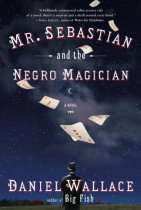
Mr. Sebastian and the Negro Magician

July 24, 2007 Big Fish, Books, Projects

bookDaniel Wallace, the dashing and talented writer who wrote Big Fish (the novel), has a brand new book in stores for your purchasing pleasure: Mr. Sebastian and the Negro Magician. I read it a bazillion years ago — books take a surprisingly long time to go from manuscript to shelf — so I’ll let the official blurb handle the one-line summary:

From the author of Big Fish comes this haunting, tender story that weaves a tragic secret, a mysterious meeting with the Devil, and a family of charming circus freaks recounting the extraordinary adventures of their friend Henry Walker, the Negro Magician.

Do you like tales of the South, the circus, and mysterious goings-on? Presumably, if you liked Big Fish. It’s a very different story, told from multiple viewpoints, and certainly worthy of the great reviews it’s been pulling in.

Daniel’s touring, so it’s worth checking when he’ll be at a store near you ((5/3/2011 Update: Tour link inactive)). While you’re at it, explore the rest of his site.

Silent Evidence

July 21, 2007 Africa, Books, Follow Up

A few weeks ago, while answering the Grey’s Anatomy question which generated so much talkback, I found myself searching for a specific term I knew had to exist: the human tendency to consider only the samples presented, ignoring other relevant items.

It felt like a fallacy, but it didn’t quite match up to any of the contenders I found online. If you squint really hard, you can make it look like a special case of the Fallacy of (Hasty) Generalization, but that seems a stretch for something which feels fairly commonplace. I ended up coining, “Fallacy of Limited Sampling” — with a mental sticky note to replace it once I found a better term.

To my surprise, I found the one over the middle of the Atlantic, during the 20+ hour flight to Africa: “silent evidence.”

That’s the term Nassim Nicholas Taleb uses to describe this phenomenon in The Black Swan. He introduces it with a story from Cicero:

Diagoras, a nonbeliever in the gods, was shown painted tablets bearing the portraits of some worshippers who prayed, then survived a subsequent shipwreck. The implication was that praying protects you from drowning.

Diagoras asked, “Where are the pictures of those who prayed, then drowned?”

Those “drowned believers” are silent evidence. You don’t take them into account because they can’t speak up for themselves. The cliché is that, “History is written by the winners.” In fact, it’s written by whoever happens to survive.

Following a discussion of the Phoenicians, and how their lack of literature is more likely due to the fragility of their paper rather than a failure of their culture, Taleb urges us to cast our nets widely:

Consider the thousands of writers now completely vanished from consciousness: their record did not enter analyses. We do not see the tons of rejected manuscripts because these have never been published, or the profile of actors who never won an audition — therefore cannot analyze their attributes. To understand successes, the study of traits in failure need to be present. For instance, some traits that seem to explain millionaires, like appetite for risk, only appear because one does not study bankruptcies. If one includes bankrupt people in the sample, then risk-taking would not appear to be a valid factor explaining success. [Link]

Taleb calls this overlooked bulk of information “silent evidence.” I assumed that was a term of art, but Googling it now, most of the references point back to Taleb’s book. It’s possible that he is its primary champion. Regardless, I like it, and intend to use it liberally.

I didn’t mean for this to become a book review, but since I started…

There are many things I liked about The Black Swan. In addition to silent evidence, I found myself nodding my head to his discussion of the confirmation bias (we tend to notice things that fit our theories), Platonicity (confusion of the model with what it’s modeling), and the narrative fallacy — our need to create a story which explains events after they happened, even if the causality is questionable (or impossible). Thus we write history books explaining how World War I started, when if you were reading the newspapers of the time, these “causes” wouldn’t have shown up.

Taleb’s central thesis is that there are unexpected incidents (Black Swans) which have enormous, disproportionate impact on our world: terrorist attacks, bank failures, iPods. By definition, we can’t predict them — which means any prediction about the future at all is extremely dubious. The best we can do is constantly remind ourselves of the limits of our knowledge, and make some contingency for the completely unexpected.Donald Rumsfeld took a lot of flack for his Yogi Berra-like koan about “Unknown Unknowns” at a Defense Department briefing in 2002, which Slate put in verse form. I’m scared to say: he’s actually kind of right. Acknowledging that there are “unknown unknowns” is important.

I’ve always been leery of statements like, “By 2075, the U.S. population will total 1 billion.” Taleb’s book helps justify my frustration at these seeemingly-scientific projections, which discount what we inherently know about the future: that we know much less than we think.

Despite these interesting points, I can’t honestly recommend Taleb’s book. Too much of it feels like being stuck next to an immodest guest at an interminable dinner party. I found myself skimming whenever I saw the words, “Lebanon,” “French,” or “Yevgenia.” It’s not Freakonomics. My hope is that an ambitious editor convinces Taleb to let her cut it down to a book half as long and twice as readable.

« Previous Page
Next Page »

Primary Sidebar

Newsletter

Inneresting Logo A Quote-Unquote Newsletter about Writing
Read Now

Explore

Projects

  • Aladdin (1)
  • Arlo Finch (27)
  • Big Fish (88)
  • Birdigo (2)
  • Charlie (39)
  • Charlie's Angels (16)
  • Chosen (2)
  • Corpse Bride (9)
  • Dead Projects (18)
  • Frankenweenie (10)
  • Go (29)
  • Karateka (4)
  • Monsterpocalypse (3)
  • One Hit Kill (6)
  • Ops (6)
  • Preacher (2)
  • Prince of Persia (13)
  • Shazam (6)
  • Snake People (6)
  • Tarzan (5)
  • The Nines (118)
  • The Remnants (12)
  • The Variant (22)

Apps

  • Bronson (14)
  • FDX Reader (11)
  • Fountain (32)
  • Highland (75)
  • Less IMDb (4)
  • Weekend Read (64)

Recommended Reading

  • First Person (87)
  • Geek Alert (151)
  • WGA (162)
  • Workspace (19)

Screenwriting Q&A

  • Adaptation (65)
  • Directors (90)
  • Education (49)
  • Film Industry (489)
  • Formatting (128)
  • Genres (89)
  • Glossary (6)
  • Pitches (29)
  • Producers (59)
  • Psych 101 (118)
  • Rights and Copyright (96)
  • So-Called Experts (47)
  • Story and Plot (170)
  • Television (165)
  • Treatments (21)
  • Words on the page (238)
  • Writing Process (177)

More screenwriting Q&A at screenwriting.io

© 2026 John August — All Rights Reserved.